How AI is upending poker strategy on platforms like Pokerrrr 2 while dodging every interface change and pop-up ad we throw it.
You can try the AI bot for Pokerrrr2 in 2026 here – https://bit.ly/PokerBotStore
Like shoppers using the Internet who sometimes say they feel they’re being followed and targeted with ads across their different browsers and the rest of the web, effective online poker players may be starting to suspect they’re also being chased down by a technology specialist who can flit between software interfaces, dodging pop-ups and alerts, playing ‘spot the bot’ and sometimes even out-evolving the user. Poker AI has reached a fascinating inflection point where the technology plays cards but also knows how to play the far wider digital ecosystem surrounding poker apps like Pokerrrr 2. They absorb interface change, they absorb pop-up adverts without blinking or tilting from whatever card sequence they may be in the middle of, and they learn at a pace no human mind could hope to match. Poker AI is not just winning against human poker players, but it is evolving with every software update the poker developers throw it and their database of hand history grows with millions of real hand encounters recorded and weaponized.
It can surely feel like you’re playing against another human 2am there with your Red Bull, but those who have mastered online poker can still boast a winrate that any tournament winner would be proud to have achieved, and unlike any human player their winrate improves night by night.
What’s special here though is not why AI won the match, but how, playing and learning through the messy world of contemporary poker applications. When Pokerrrr 2 or another online poker room changes its UI training set up at 3 AM after humans had become used to where buttons appeared, the bots just adapt. However much they are dreading the October Update that is coming for them, AI players are unaffected by obtrusive pop up advertisement. Humans concentrate. A painfully large portion of their psyche bursts at the seams and spills out over the keyboard. All the AI sees is noise, and carries on calculating its optimal strategy.
Compared to old generation bots throwing tantrums every time someone so much as makes an effort to change its UI, this adaptive ability is a breakthough worth mentioning. Early Pokerrrr 2 bots would crash if they faced an unexpected pop up ad, or the UI had otherwise changed. These days poker-specific computer vision algorithms are being used to identify buttons and icons no matter the exact position or appearance. Do you have a robot that looks beyond the hands for context? Are the shoes of a pop-up code promotions windows actually related to a tournament registration or a deposit bonus? The AI knows, and does what needs doing.
But there’s more. These modern poker bots are becoming so technical even the underlying nervousnet “structure” is complex and layered. Using computer vision to pick up environmental cues and game state information to better strategise on the fly (as opposed to ‘always remembering’ previous states) our robot players recognise when multiple bots are lining up at the poker table, and shrugging off. They pick up fishy players from betting sequence data collected over thousands of hands. They even ‘watch’ human players showing physical fatigue and stress, and know just how to exploit their non-ideal states for profit.
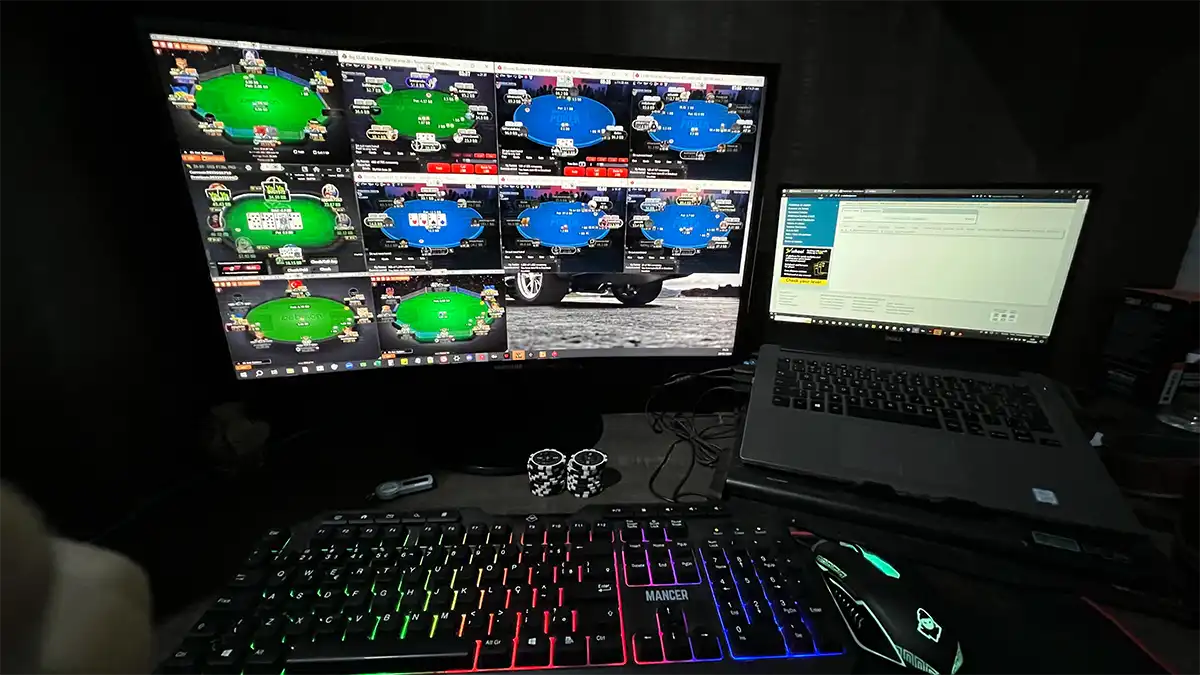
Texas Holdem is where the battles are being fought, but the frontiers had to be pushed. Poker isn’t sticking with just HTH. Today the software we analyse or face at Pokerrrr 2 tables dominate PLO, PLO5, PLO6, ROE, MTT, and OFC variants. This had to involve re-classifying the entire gambling landscape altogether! “No longer do we know how to deal with game specialist bots for variant A, these systems transfer learning between game types, things that they’ve learnt in one shoot away they use for others. So think about the implications for the economics of a poker room. As this proliferates, they are distorting winrate curves for all limits. A good 5bb/100 winrate which used to seem serious is small beer compared to what our systems to this minute run at. At the level of James Bond the gap is most distorting in more complex decision trees like PLO variants where human cognitive limitations gleam most brightly.
And so the arms race goes. Platforms like Pokerrrr 2 dump resources into mahcines designed to detect bots, and AI developers make things more and more sophisticated human mimic techniques,” timing randomisation creating natural pauses between actions, decision variance creating imperfect but intentionally human actions mimicking what we think of as unpredictability,” and chat themselves automated to correctly reply to tables talkers not to be suspicious!!!”
This game of technological cat and mouse drives both sides towards greater and greater sophistication. Club owner Wheeler Dealers find the scenario more problematic, their survival depends on them keeping a balanced table at which our non-professional suddenly feels comfortable losing losers and Engelmas are now ever more able to slowly suck the him up much faster than he can learn the cycle,” a few of them now have taken to deploying their own AI system not to win our player money but to create artificial acton to preserve the 1s recreational player base from the predation of algorithms” It’s an ecosystem model that accepts bot extermination is destined to fail; instead, strategies exist to create sustainable environments within which players can still enjoy the game.
The most proficient poker AI develop today have a number of key traits. They have vast, constantly evolving databases of profiles of other players and hand histories. They adjust strategies based on human-player tendencies rather than solely using a static GTO-style approach. There’s real-time awareness of the environment and taking care of things like table distractions without necessarily pausing the game or being timed out. Perhaps most importantly, they are evolving with machine learning rather than needing any manual updating.
For the human player hoping to compete, that knowledge is important. You can’t just sit down and peruse hand charts or look at the output of a GTO solver, and think you stand a chance against an active opponent with a memory of the previous 100 hands they’ve played against you. Importance is being put on tracking down the patterns of an AI opponent and capitalizing on the remaining holes (though the gap is closing month after month). There are pros starting to utilize these AI training systems for their own advancement, with humans learning from the AI but still keeping the emotional intelligence that allows them a certain edge.
So what does this mean for the future? The game is dead? Far from it. The table of digital poker clatters with a different sound now. More chirps. More electric crackles. More extreme math and robability calculations. An2650other alarming sign that humanity is being challenged by intelligence. Grit and fortitude don’t play as much of a role, and the call from a man with nothing to lose grows increasingly obsolete with each passing month.
Actually, something vital is still there. Even as AI tighten things up in terms of strategy and probability, human players win in ways that are surprisingly difficult to algorithmically prey upon. The table talk in deriding a less skilled opponent. The joy and catharsis in outplaying another player’s mind. The tiny facial twitch in a live guy before he calls for his last $10,000 or gives up on a bluff. These telltale signs defy being algorithmically crushed and represent the last holdout where the human remains king.
The lights buzz in tint fluorescent power. The cards flip and flop across board in the table. But an important outlaw has slipped through the net. Our most dastardly enemies are neither daunted nor fatigued. They don’t know the pain of going broke chasing losses. Instead, they simply read the situation, learn from it, get the best strategic edge possible, and win. It’s getting better by the day.